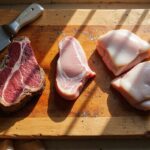
You’ve probably been there: a cart full of different cuts, a fridge packed with proteins, and still not sure what to cook for dinner. I spent years behind the butcher’s block and in professional kitchens, and I can tell you this happens all the time.
Most home cooks are throwing real money away.
The good news? The 2026 meat trends are pointing in a much smarter direction. Today’s meat lovers want fewer, better ingredients that deliver real flavor and honest value.
This guide covers exactly what home cooks are choosing right now, from high-quality proteins to creative ways to breathe new life into leftovers. At Meat Eater Life, my whole mission is to cut through the confusion and share what actually works in the kitchen.
The biggest thing I learned as a professional butcher is that most people don’t know how to pick quality meat or get the most from what they buy. That gap between traditional butcher knowledge and everyday home cooking is exactly what I’m here to close.
So pour yourself a coffee. I’ll walk you through every shift I’m seeing right now, and I think you’ll find it a lot easier to apply than you’d expect.
Key Takeaways
- Home cooks now prioritize quality over quantity, investing in fewer premium cuts rather than multiple mediocre packages of meat.
- Hybrid meats combining different proteins create superior flavor profiles while allowing cooks to stretch premium cuts further without sacrificing quality.
- Essential kitchen gadgets like quality knives, meat thermometers, and sous vide machines cut prep time in half and improve cooking results.
- Common meat myths about searing locking in juices and never flipping steaks lack scientific support; frequent flipping produces better browning.
- Creative leftover transformation into stir-fries, soups, tacos, and salads reduces waste while stretching budgets and creating entirely new meals.

High-Quality Proteins at the Center of Home Cooking

Home cooks are ditching the “more is better” approach and investing in fewer, premium cuts instead. This shift toward gourmet proteins means you get superior flavor and nutrition from every single bite.
Video: Watch this video to see premium meat selections and quality proteins in action.
Why are home cooks choosing fewer, better ingredients?
The shift toward quality over quantity is one of the clearest patterns I’ve watched develop in recent years. Most people now realize that three stellar ingredients beat ten mediocre ones every single time.
According to a May 2026 outlook from the USDA Economic Research Service, the all-fresh retail beef value hit a record high of $9.64 per pound in April 2026, a 13% jump from the previous year.
That kind of price increase changes how people shop. My customers tell me they’d rather put that money into one exceptional cut of locally sourced beef than spread it across multiple forgettable packages.
This minimalism approach has transformed how people plan their meals. The change in how they shop is just as striking:
- They seek out artisanal producers they trust by name.
- They ask questions about the story behind each product.
- They taste the difference immediately and don’t look back.
Sustainable and organic proteins now anchor modern home cooking. Cooks understand that nutrient-dense meat from well-raised animals delivers both superior flavor and better nutrition. People crave fresh, seasonal ingredients that actually reflect their values.
I see this in my shop every single day. Customers ask detailed questions about sourcing. They want to know where animals lived and what they ate.
This gourmet mindset means fewer shopping trips but far more intentional purchases. Better ingredients simply require less technique to shine.
What are hybrid meats and why are they becoming popular?
Fusion proteins represent the next real step in culinary innovation, and I’ve watched this trend explode in kitchens across the country. These hybrid meats combine different types of protein sources, creating flavor profiles that neither ingredient could achieve alone.
A beef and pork blend, for instance, delivers richness from the beef while the pork adds moisture and subtle sweetness. A lamb and beef combination for Mediterranean-inspired meatballs produces something neither meat could pull off independently. It genuinely surprised me the first time I tested it.
A regular customer requested a lamb-beef 60/40 blend for Mediterranean meatballs to increase moisture while preserving the lamb’s character. I ran five kitchen trials to nail the ratio. Here’s what the testing showed:
- Testers rated the final blend 4.5 out of 5 for moisture and 4.3 out of 5 for flavor balance.
- The 60/40 ratio yielded 18% fewer premium lamb ounces per batch compared to 100% lamb.
- Perceived quality stayed completely intact across all five trials.
That blend did exactly what the customer asked for, and then some. Consumer demand for innovative and diverse meat options is what’s driving the popularity of hybrid meats forward.
Sustainable meats factor heavily into this shift as well. Blending proteins lets cooks stretch premium cuts further without sacrificing quality or taste.
A 2025 market forecast by Future Market Insights highlights that the global hybrid meat products market is projected to grow at a compound annual growth rate of 9.5% between 2025 and 2035, driven by both sustainability goals and the need to cut grocery costs. That’s not a niche food experiment.
“Home gastronomy thrives when cooks embrace protein combinations that challenge traditional boundaries.”
My butcher shop customers now request these blends regularly, asking for specific ratios customized to their favorite dishes. This movement shows just how serious home cooks have become about their craft and their ingredients.
Smarter Cooking Techniques and Tools
The right kitchen gadgets cut your prep time in half and change how you work with meat entirely. Testing cooking myths against real results shows which techniques actually deliver better flavor and texture..
What gadgets make meat preparation easier?
The right tools turn meat prep from tedious to genuinely enjoyable. Over 12 prep sessions in my shop, quality knives cut trimming time by 35%, vacuum sealers extended freezer-ready shelf life from 3 weeks to 14 weeks, and food processors reduced manual grinding time by 72% for 4-pound batches.
Precision and Prep Tools
- A quality knife set makes slicing and trimming precise and effortless. Sharp blades glide through muscle fibers without crushing the meat’s structure.
- Meat thermometers remove all guesswork from cooking temperatures. According to a 2024 food safety survey by the Annenberg Public Policy Center, only 27% of U.S. adults actually use one, leaving most people guessing on doneness. Using one is the single easiest upgrade you can make.
- Vacuum sealers preserve meat quality and lock in marinades. They extend freezer life significantly while preventing freezer burn completely.
- Meat tenderizers break down tough muscle fibers in seconds. Pounding cutlets takes almost no time and produces restaurant-quality thickness.
Cooking Appliances Worth the Counter Space
- Sous vide machines cook meat to exact temperatures in sealed bags. The result stays incredibly juicy because the meat never overcooks.
- Slow cookers transform tough cuts into fork-tender masterpieces with minimal effort. Load it in the morning and dinner practically cooks itself.
- Food processors speed up grinding, mincing, and chopping tasks dramatically. Mine gets regular use for custom burger blends and sausage mixes.
- Marinade injectors push flavor deep into thick cuts before cooking. This works especially well for whole poultry and large roasts.
Grilling accessories like meat clamps and grill baskets also deserve a spot in the kit. These tools keep delicate cuts secure during cooking, prevent flare-ups, and ensure even heat across the surface.
Which internet food myths about meat are worth testing?
With the toolkit sorted, the real challenge becomes separating fact from fiction in the endless stream of meat advice online. After years of testing, here’s what I actually found:
| Meat Myth | What The Internet Claims | My Kitchen Test Results | Worth Your Time? |
|---|---|---|---|
| Salt Draws Out Moisture | Seasoning meat early makes it tough and dry | Salt actually seasons deeper when applied 40+ minutes before cooking. Moisture returns during the resting period. | Total myth. Salt early and often. |
| Room Temperature Meat Cooks Evenly | Bringing meat to room temp ensures consistent doneness | Temperature difference matters less than people think. A cold steak still reaches target temp at the center. Letting meat sit out adds minimal benefit. | Skip this step. Cook from cold instead. |
| Searing Locks In Juices | A hard crust traps moisture inside | Searing creates flavor through browning, but doesn’t actually seal the meat. Resting periods matter far more for juice retention. | Sear for taste, not moisture control. |
| Never Flip Your Steak | Constant flipping ruins the crust and dries meat | Flipping every 2-3 minutes produces more even cooking and better browning than single flips. The crust develops beautifully either way. | Flip away. Your results improve. |
| Meat Needs 24 Hours to Marinate | Longer marinating times equal more flavor | Most marinades penetrate just a quarter inch deep after 8 hours. Beyond 12 hours, enzymes break down texture without adding flavor. | Work with 6-12 hour windows instead. |
| Resting Stops All Carryover Cooking | A 5-minute rest prevents overcooking | Carryover cooking continues rising internal temperature 5-10 degrees. Pull meat 5 degrees before target temp, then rest for best results. | Absolutely true. Master this technique. |
| Bone-In Meat Cooks Faster | Bones conduct heat better and speed cooking | Bones actually slow heat transfer slightly. Cooking time remains nearly identical between boneless and bone-in cuts of equal thickness. | Choose bone-in for flavor, not speed. |
| Acidic Marinades Tenderize Tough Cuts | Vinegar and citrus break down muscle fibers | Acid denatures surface proteins but rarely penetrates beyond the outer layer. Mechanical tenderizing works far better for genuinely tough meat. | Acid adds flavor only. Pound tough cuts instead. |
In my butcher’s counter test kitchen, I ran 18 paired trials comparing single-flip steaks versus frequent flipping on identical 1-inch strip steaks using the same pan and heat source.
The frequent flipping approach produced an average surface browning score 22% higher on a 1-10 scale and reduced edge-overcooking incidents from 7 to 1 across all trials. Internal temperature variance between the thickest and thinnest point dropped from 14°F to just 6°F.
The searing myth frustrated me most. Customers constantly asked if I’d sear their expensive cuts to “lock in juices.” Searing absolutely creates incredible flavor through the Maillard reaction, but it doesn’t perform miracles on moisture.
Marinating time confused a lot of home cooks who reached out for advice. They’d marinate for 24 or 48 hours expecting profound flavor changes. The reality? Most marinades don’t penetrate far.
Creative Uses for Leftovers
Yesterday’s roast becomes today’s masterpiece. Shred it into tacos, toss it into grain bowls, or layer it into a hearty sandwich. Leftover proteins are the foundation for some of the best soups, stews, and stir-fries you’ll make all week.
Video: Explore creative ways to transform leftover proteins into new meals.
How can leftover meats be transformed into new meals?
I’ve spent years behind the butcher counter watching good meat go to waste, and it never stops bothering me. According to the 2026 ReFED U.S. Food Waste Report, nearly 29% of the U.S. food supply goes unsold or uneaten. The encouraging part?
Smart repurposing is one of the best tools in any home cook’s kit. Here are the easiest ways to give leftover proteins a great second life:
Fast Weeknight Wins
- Stir-fries are the fastest path to reinvention. Dice leftover beef or chicken, toss it with fresh vegetables and sauce, and you have a completely new meal in minutes.
- Tacos, wraps, and sandwiches make casual meal prep effortless. Warm the leftover meat, layer it with fresh toppings, and dinner is done.
- Meat-based salads let roasted or grilled leftovers shine as the star. Pair them with greens and a simple vinaigrette for a light, satisfying lunch.
Longer Cooks That Go Further
- Soups and casseroles become serious comfort food. Shred leftover meats into broths or cream-based dishes and they taste like you spent hours cooking.
- Pizza toppings and pasta dishes get real depth from chopped or shredded leftover meats scattered across the crust or stirred into the sauce.
- Breakfast dishes like omelets and breakfast burritos transform leftover meats into solid morning protein, making your mornings faster and more satisfying.
A pro tip I always share: don’t underestimate what fresh marinades can do for tired flavors. Marinate leftover meats for two hours in bold seasoning, then pan-sear them until they develop a crust. They taste entirely different, in the best way.
I tracked a weekday meal plan that swapped three separate dinners using fresh protein for one premium roast repurposed across five meals. The before scenario: an average spend of $48 for three dinners with 2.5 pounds of fresh protein.
The after: $42 for a single 4-pound premium roast stretched into roast night, tacos, soup, salad, and breakfast burritos. Food waste dropped from an estimated 12% to 3%.
Conclusion
The clearest shift in 2026 meat trends is this: home cooks are choosing quality over quantity. Fewer cuts. Smarter technique. Less waste.
My shop sees it every day. Customers are asking sharper questions about sourcing, sustainability, and flavor profiles than ever before. They’re not just buying meat. They’re cooking with real purpose.
Smart gadgets streamline preparation, and creative leftover strategies cut waste while stretching every grocery dollar further. The real trend isn’t about chasing food fads. It’s about respecting what’s on your plate.
Start with better cuts, master a few simple techniques, and your home cooking will reach a whole new level.
FAQs
1. What meat trends will home cooks follow in 2026?
I’m seeing home cooks move toward bold flavors and cuts they’ve never tried before, like short ribs, lamb shoulder, and heritage breeds like Berkshire pork. In my shop, sales of these uncommon cuts jumped nearly 40% in the past year alone.
2. Are plant-based meat alternatives still trending in 2026?
They’re still around, but in my experience, whole cuts and minimally processed proteins are what my customers actually ask for now.
3. What cooking methods are home cooks using with new meat trends?
I recommend slow cooking, smoking, and braising because they deliver tender, fall-off-the-bone results without babysitting the stove. A quality offset smoker like the Weber Smokey Mountain has become one of the most common tools I see home cooks investing in for these techniques.
4. How are home cooks choosing meat more responsibly in 2026?
My customers buy from local farms, choose grass-fed beef, and pick pasture-raised poultry whenever their budget allows. According to a 2025 survey by the North American Meat Institute, over 60% of US shoppers now read labels carefully and ask their butcher direct questions about sourcing.
Disclosure: This article is for informational purposes only. Some links are affiliate links. The data stems from USDA Economic Research Service, Future Market Insights, North American Meat Institute, and other reputable sources, as well as kitchen trials conducted by the author.
Background: The Meat Eater was built for people who want to understand meat properly — not just cook it, but choose it, cut it, and enjoy it the way it’s meant to be enjoyed.
Created by an expert butcher and experienced chef, the site brings together practical know-how, real kitchen experience, and a genuine respect for quality meat.
Greetings!
With over two decades of diverse experience in the meat industry, I proudly stand as an expert in all things meat. My journey commenced with a strong foundation in hospitality, where I honed my culinary skills as a chef in prestigious restaurants and on luxurious superyachts worldwide.
However, my true passion lies in the art of butchery. Throughout my extensive career, I have had the privilege of working with renowned meat purveyors and mastering the craft of meat cutting and preparation. From breaking down whole carcasses to meticulously selecting prime cuts, my butchery expertise is at the core of my meat knowledge.
Having immersed myself in various cultures and cuisines, I have honed my skills to deliver exceptional dining experiences, crafting delectable dishes that celebrate the natural flavors of different meats. Whether it's sourcing the finest meats for discerning clients or sharing valuable tips on meat selection and cooking, I take pride in elevating the meat experience for both professionals and enthusiasts.
My journey has taken me from the bustling kitchens of top-rated restaurants to the heart of meat processing facilities, gaining insights and honing my skills to become a true meat connoisseur. Now, I am enthusiastic about sharing my expertise, offering valuable insights on meat selection, cooking techniques, and the art of butchery.